How to Regulate Your Nervous System as a Mom (When You Can’t Get Five Minutes Alone)
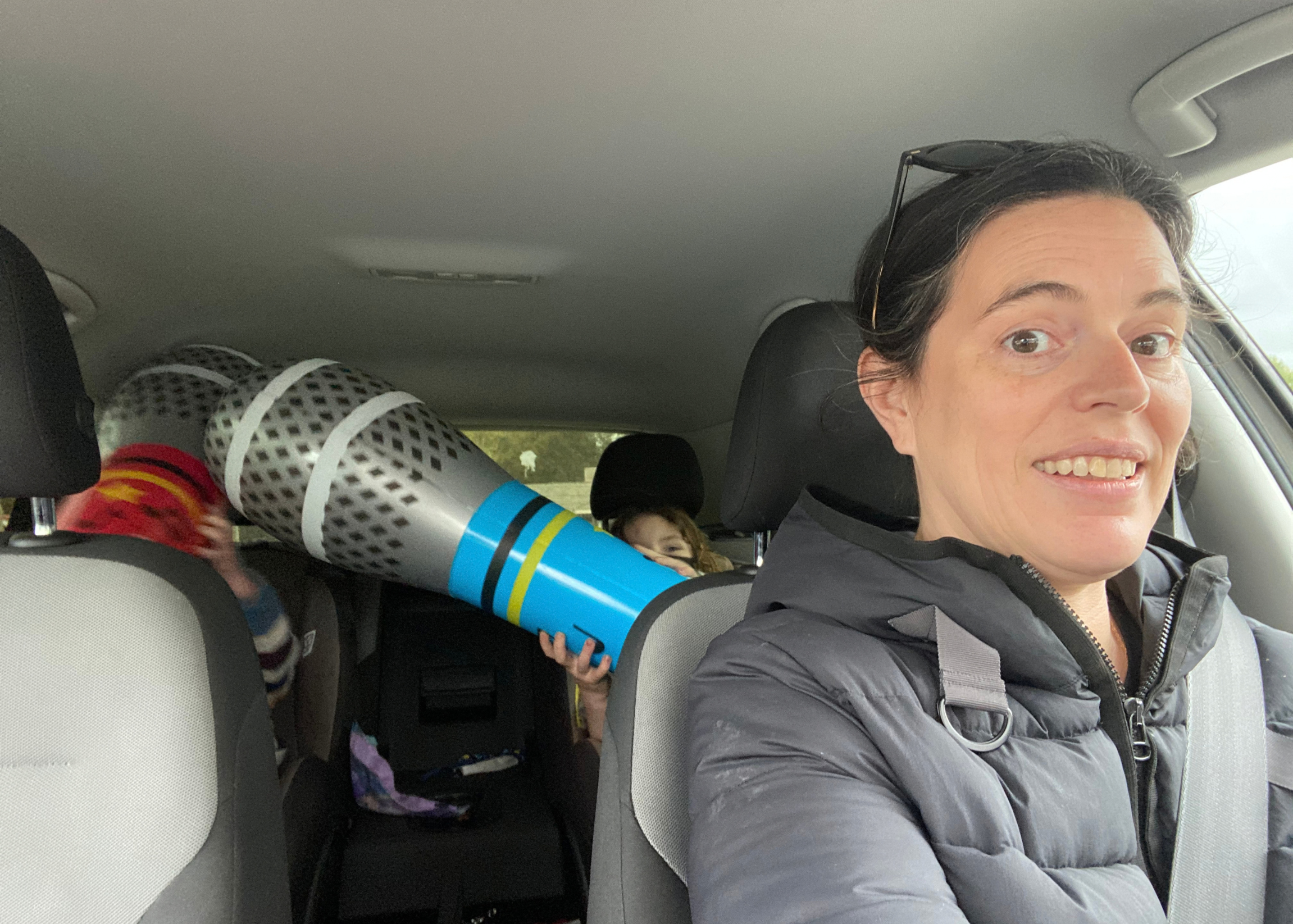
To regulate your nervous system as a mom, start with your body. Notice your early warning signs, release tension physically (unclench your jaw, shake out your hands), make your exhale longer than your inhale, and rebuild rest over time. A calmer body makes calmer thoughts possible.
Somewhere around 7 pm, my patience wanes.
The kids haven’t changed. The whining is the same volume as it was at 3 pm. There’s usually not much bickering, the house is cleaner than it was a few hours ago, and the kids have only a few things left to do, so I’m rarely repeating myself. But I’ve been making decisions since 6 am, and by 7 I have nothing left to make them with.
It took me an embarrassingly long time to see the pattern. Once I started looking at my nervous system instead, everything shifted. I moved bedtime earlier, and I stopped mistaking the 7 pm version of me for the real me. The real me reads stories and laughs at dinner. The 7 pm version is just really tired.
If this sounds familiar, here’s what helped me. It’s what I’ve learned over the last few years, in the kitchen, with my kids right there. Read it through, or jump to what you need right now.
What Does It Mean to Regulate Your Nervous System?
Nervous system regulation is your body’s ability to move between alert and calm, and return to steady after stress. It does not mean feeling calm all the time. A regulated system can ramp up when it needs to, then settle again.
A healthy nervous system is flexible. It gets energized for the school-run scramble, work deadlines, and real threats to your safety. Then it softens at the end of the day. Dysregulation is what happens when we get stuck on high alert or in shut down, unable to find our way back to safety.
Physiologically, there’s more to it, but this is why we can’t think our way to calm. Calm isn’t a decision. It’s a state our bodies move into when they feel safe enough.
What Are the Signs Your Nervous System Is Dysregulated?
Common signs include a clenched jaw, shallow breathing, a racing heart, short or sharp answers, tunnel vision, feeling touched out, and crying at small things. A dysregulated system can also look like shutdown: numbness, zoning out, or flat exhaustion.
Oh, mama! I know you feel this.
And unfortunately, most of us don’t notice these signs until after we’ve snapped. By then, the body has been waving flags for a while (maybe all our lives). But snapping is the result, not the root. The earlier signs are quieter, but noticing them gives us room to choose our reaction.
For me, dysregulation feels like tightness in my chest, short answers, and heightened sensitivity to sound. Eventually, it becomes an exhaustion that no amount of sleep can fix.
| State | What it feels like | What you might hear yourself say |
|---|---|---|
| Wired (high alert) | Tight chest, clenched jaw, shallow breathing, sounds feel too loud | “Fine.” “Not now.” “I said no.” |
| Tired (shut down) | Foggy, numb, heavy, checked out | “I don’t care.” “Whatever you want.” |
| Tired and wired (both at once) | Exhausted but unable to settle, jittery, snappy, awake at 11 pm with a racing mind | “I’m so tired, why can’t I relax?” |
Why Is It So Hard to Stay Regulated as a Mom?
Moms carry constant sensory input, interrupted sleep, endless small decisions, and the role of safety net and comforter. Of course our nervous systems are running past capacity! And we rarely get a moment to come back to steady before the next ask arrives.
Think about what we hold at once: our own tired nervous system, our kids’ nervous systems (which borrow ours), our partner’s mood, the house’s mood, and the schedule’s mood. Then add noise, touch, and interruptions and questions all day long, and it makes sense that we yell and feel like bad moms afterward.
Part of the fix is carrying less, simplifying decisions, and saying no more often. Another part is taking care of ourselves with rest. And we can build more capacity to stay regulated, which I get into below.
How Do You Calm Your Nervous System in the Moment?
The fastest resets use your body: unclench your jaw and drop your shoulders, shake out your hands, put your feet on the floor, exhale longer than you inhale.
There are a ton of ways to use your body to calm your mind and reset your nervous system. You don’t need to try all of them (unless you haven’t found one that works). Here are a few that work for me:
- Noodle. Okay, this one is a little silly, but it works (and it gets kids giggling). Act like a noodle. It’s the opposite of an angry posture. When we’re angry, we’re tight: jaw clenched, brows furrowed, sometimes fists. When you noodle, you’re loose and limp, and it’s hard to be angry when you’re acting like spaghetti. But seriously, the body sends a message to the mind, and that changes the emotion.
- Take TayTay’s advice and shake it off. Literally shake the frustration or annoyance off. It helps your body let go of the stress it’s holding and move some of it out.
- Ground yourself. Press your feet firmly into the floor. It tells your body it’s supported, and it pulls your attention out of the racing thoughts and into something solid.
- Lengthen your exhale. Breathe in through your nose, then out slowly through your mouth, taking longer on the exhale. If you want more, read using breathwork to transform your parenting or how breathwork helped when meditation and therapy weren’t enough.
How Do You Build Nervous System Capacity Over Time?
You build capacity by widening your window of tolerance: protecting sleep, reducing daily load, practicing small resets often, and getting support. With greater capacity, regulation becomes your baseline.
In-the-moment resets matter. But the bigger shift comes from widening your window of tolerance. That’s the space where you can handle the noise, the meltdowns, and the missing cleats without snapping or shutting down. The wider the window, the fewer things push you out of it.
I practice on most days, when nothing is wrong. A one-minute reset while I stir dinner. A long exhale in the pickup line. It feels like nothing. But it’s what makes the tools available at 7 pm.
Longer breathwork practices go a step further. They intentionally stress the body, in a safe and chosen way, which gives your nervous system practice at coming back to steady. That’s how a window widens: you visit the edge deliberately, with support, and learn the way back. Go gently, and skip anything that doesn’t feel right for your body.
Does Nervous System Regulation Replace Therapy?
No. Regulation skills work alongside therapy and medical care, not instead of them. If you’re struggling with anxiety, depression, or rage, especially after having a baby, please talk with your doctor or a therapist.
Common Questions About Nervous System Regulation
Does a regulated nervous system mean being calm all the time?
A regulated nervous system isn’t always calm. Calm is a feeling. Regulated means your nervous system can move between states when it needs to and come back to steady. You can be energized, tired, or even upset and still be regulated, as long as you can find your way back.
How do I regulate my nervous system quickly?
Use your body first. Unclench your jaw, drop your shoulders, shake out your hands, press your feet into the floor, and make your exhale longer than your inhale. Most of these take under a minute and can be done anywhere.
What does a dysregulated nervous system feel like?
It can feel like a tight jaw, shallow breathing, a racing heart, snapping at small things, tunnel vision, or tears you can’t explain. It can also feel like shutting down: numb, foggy, or checked out.
Can I regulate my nervous system with young kids at home?
Yes. The tools I use are built for noise and interruption: a jaw unclench, a shake-out, feet on the floor. You don’t need a quiet room or an hour. You need a few seconds and the willingness to try.
How long does it take to see a change?
Many people feel a shift the first time they try a body reset. Widening the window of tolerance takes weeks to months of small, repeated practice. Progress tends to look like catching the signs a little earlier even if though you’ll still get triggered from time to time.
Where to Go From Here
Back to 7 pm. I still get there, right on schedule. But my window of tolerance has widened, so the noise, the interruptions, and the zoomies my kids get right around 8 pm don’t make me snap as fast. When I start losing patience, I notice sooner and ask my kids for a moment. I use my breath, I shake it off, and sometimes, yes, I still snap. It’s not perfect, but our evenings have more room to breathe.
If you’d like to go deeper, I’d love to have you at my free live training, The Reason You Yell at Your Kids, on Wednesday, November 18 at 10am PT. We’ll talk about the biology, the gap between trigger and reaction, and tools you can use mid-chaos.
What’s your 7 pm? Tell me in the comments. I read every one.